
Financing the Voluntary Carbon Market: Opportunities in Superpollutants




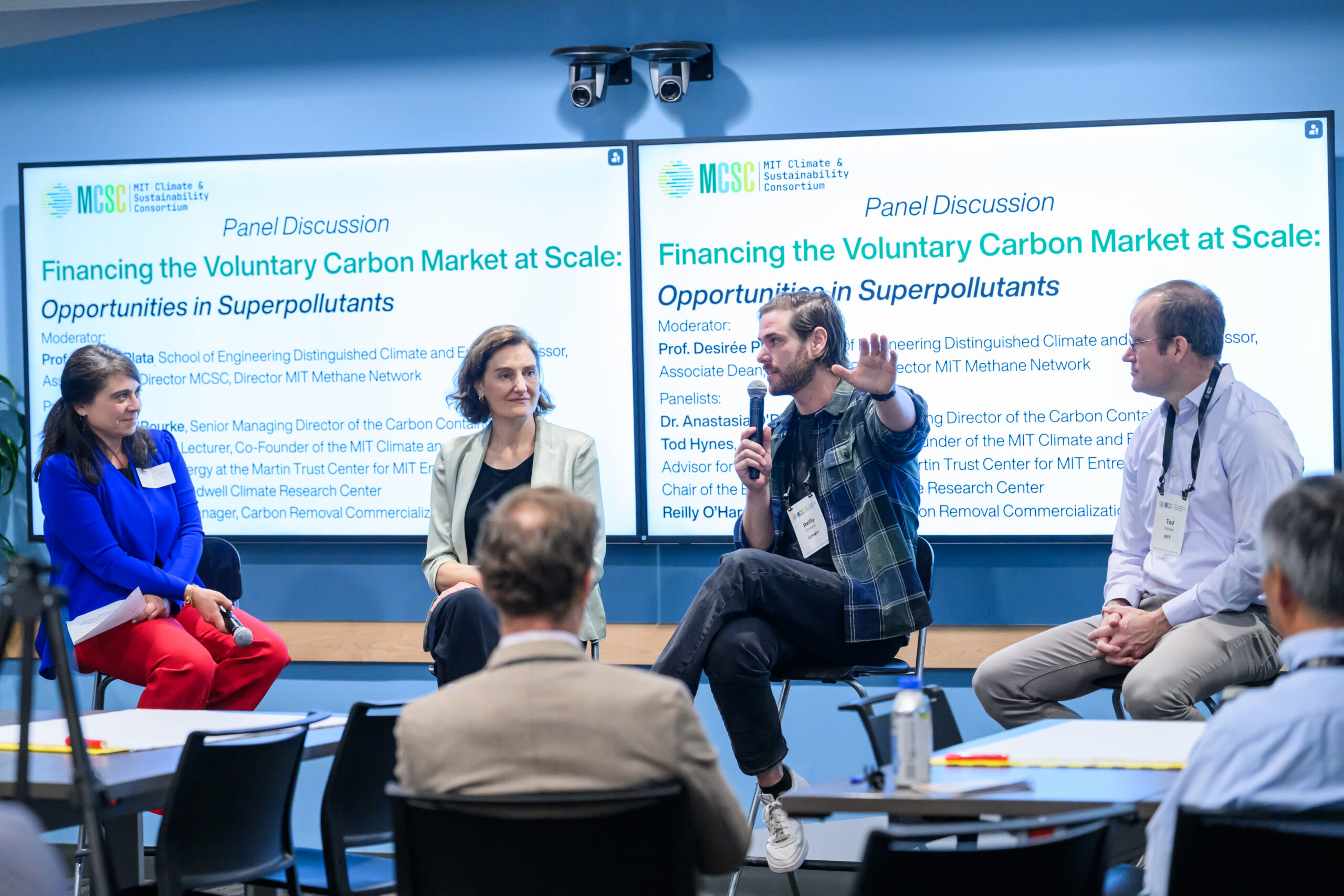

Facilitators:

PhD Candidate, MIT School of Engineering

MCSC Impact Fellow

Key Takeaways from Session
- The workshop highlighted that superpollutant opportunities vary widely across sectors and supply chains. Some sources, such as landfill methane, refrigerants, and certain industrial gases, are more identifiable and measurable, while agricultural methane, field-based N2O, black carbon, and other diffuse sources are harder to characterize. This creates a practical distinction between where mitigation potential is high and where companies can confidently identify, measure, and act on that potential.
- A recurring tension was that monitoring, reporting, and verification (MRV) is both essential and constraining. Strong measurement and verification are necessary for buyer confidence, credit quality, and defensible claims, but overly burdensome or granular MRV can increase costs, slow project development, and make some superpollutant pathways harder to scale.
- A key insight emerging from the workshop is that the underutilization of superpollutant mitigation arises from how carbon crediting bodies distinguish between different mitigation activities. Commonly, one carbon credit is defined as one ton of CO2-equivalent emissions reduction or removal, most commonly applying a 100-year global warming potential (GWP100). While this has enabled fungibility across sectors and project types, it has also obscured meaningful differences in the timing, durability, and temperature response of different greenhouse gas mitigation efforts.
- A forward-looking theme that emerged is the need to move from credit fungibility toward financial frameworks that make differences in climate impact visible to decision-makers. Participants discussed several mechanisms for doing so, including climate liabilities on corporate balance sheets, superpollutant projects treated as investable assets, catalytic offtakes, advance market commitments, blended finance, price transparency, and clearer regulatory signals. Scaling superpollutant mitigation will require better credits, but also a broader market architecture capable of recognizing timing, durability, and temperature response as financially material attributes.
- The emerging themes and findings highlight the importance of aligning market incentives with explicit climate objectives and developing realistic pathways that give nascent carbon dioxide removal technologies time to scale.
- The strategic opportunity is not to replace one climate solution with another, but to build portfolios which enable rapid reductions in near-term warming alongside sustained investment in durable long-term stabilization.