
Collaborative Infrastructure Planning for Freight Electrification



Facilitators:

Professor, Department of Civil and Environmental Engineering (CEE) Laboratory for Information and Decision Systems (LIDS)
Leading MCSC Seed Awards Project: Optimization and collaboration toward a scalable charging infrastructure in logistics

The 1942 Career Development Professor and Assistant Professor of Operations Research and Statistics in the MIT Sloan School of Management
Leading MCSC Seed Awards Projects: Logistics electrification through scalable and inter-operable charging infrastructure: operations, planning, and policy (2022); Optimization and collaboration toward a scalable charging infrastructure in logistics (2024)

Executive Director
Key Takeaways from Session
- This workshop was at the intersection of freight logistics, energy systems, data science, operations research, and infrastructure economics. Researchers, logistics operators, and industry partners gathered to address one of the most persistent structural barriers to freight electrification: the coordination failure between fleet adoption and charging infrastructure deployment.
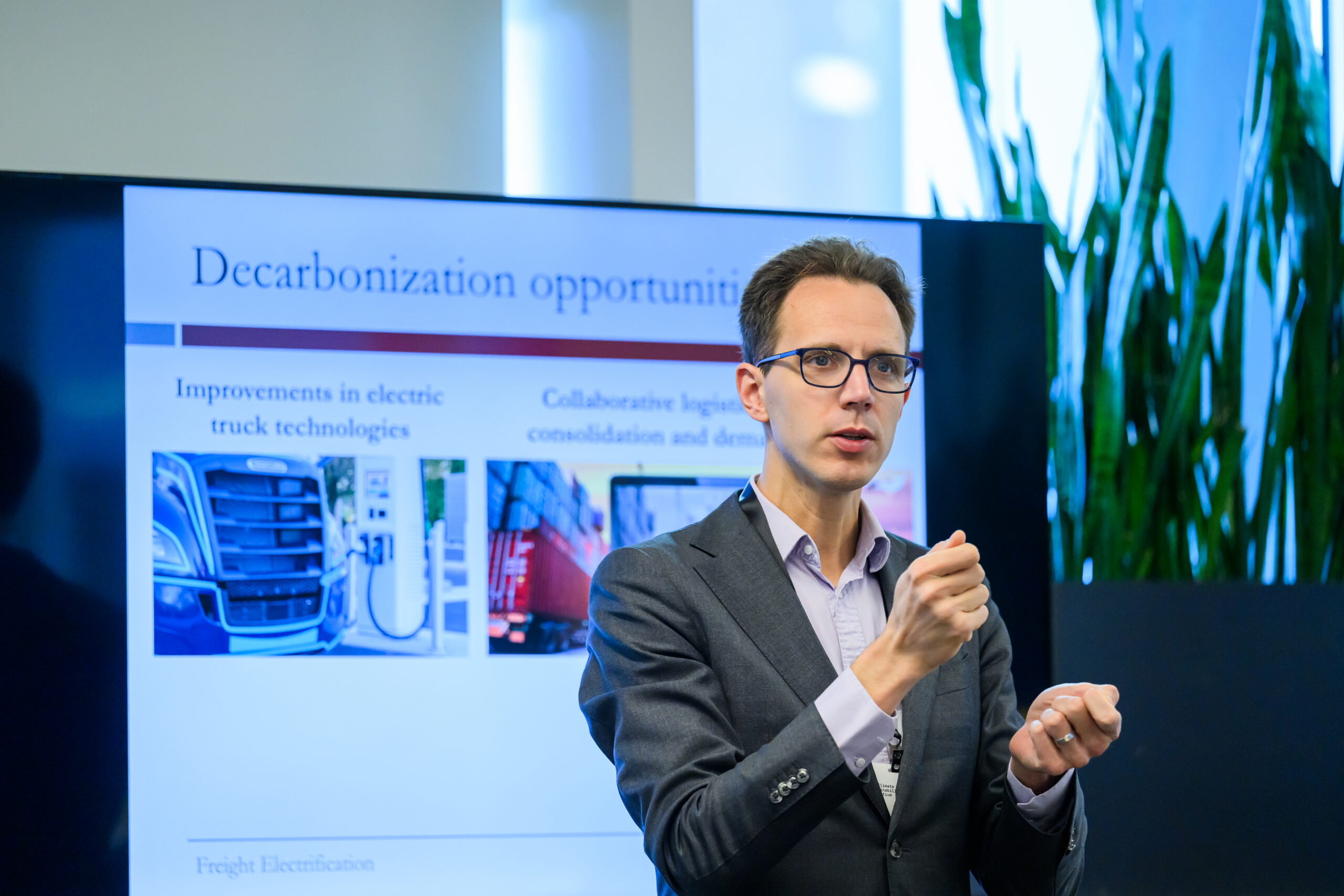
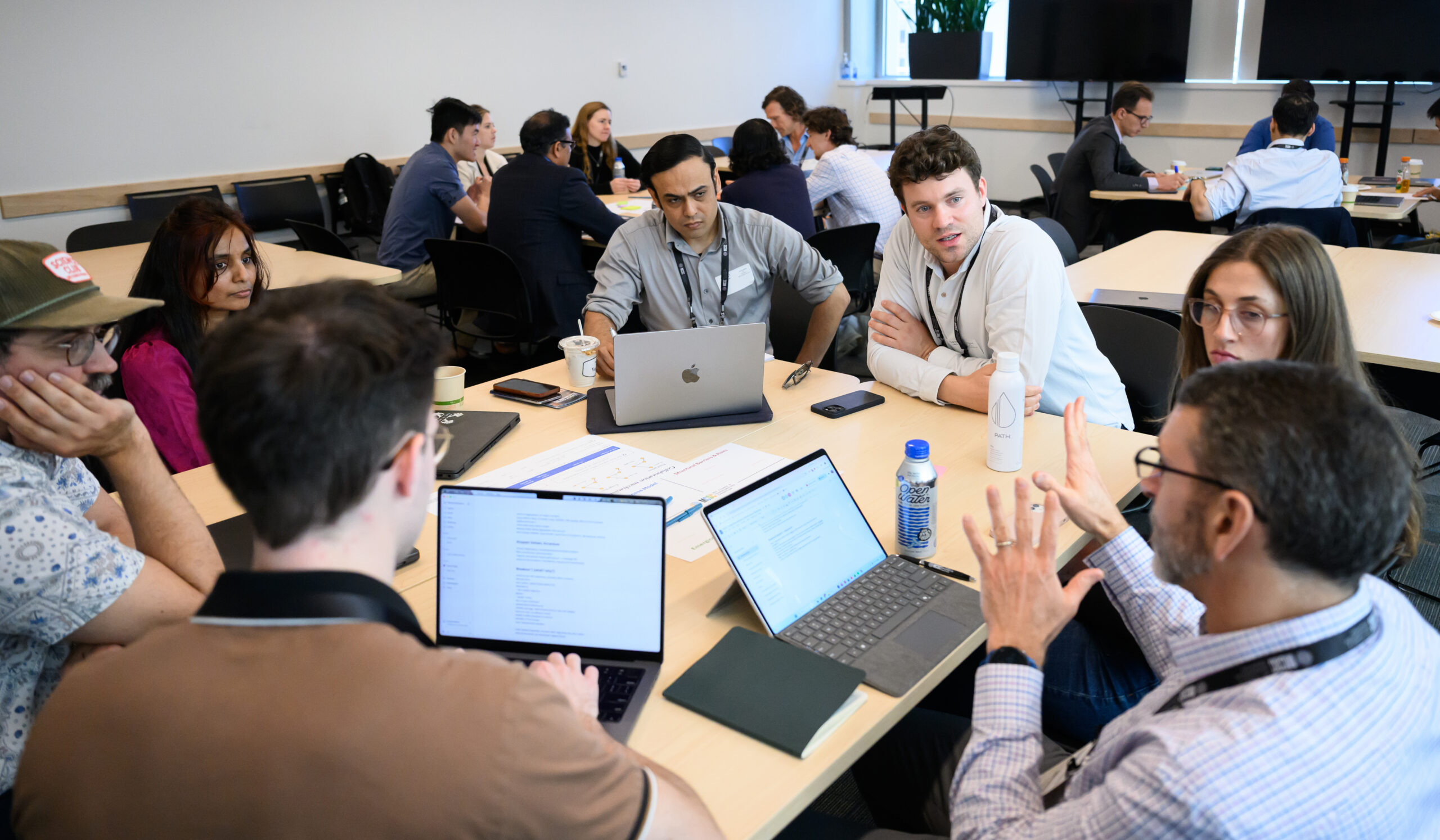
- MIT faculty opened with a research framing that situated the challenge within a formal model of interdependent investment decisions and proposed analytical tools for designing coordination mechanisms. Catherine Shepherd of Revoy followed with a presentation of its modular range-extension technology, offering a hardware-level perspective on bridging the transition gap. Anupam Gehani of Accenture then presented four real-world collaboration archetypes drawn from live deployments across North America and Europe, grounding the theoretical challenges in operational realities. A structured co-design session closed the session, bringing all participants together to surface barriers, stress-test assumptions, and develop shared directions for action.
- What emerged was a shared understanding of where analytical tools, collaboration mechanisms, and institutional design can unlock progress; new research directions inspired by the exchange between academic and industry perspectives; and the seeds of further collaboration among participating organizations.
- The workshop made clear that freight electrification is not solely a technology problem. The vehicles are improving, the economics are moving in the right direction, and viable collaboration models already exist and are generating measurable results. What lags behind is the institutional and analytical infrastructure needed to scale these models, adapt them to new corridors and stakeholder configurations, and reduce the friction of replication.
- The next phase of decarbonization in freight will be won or lost in the design of coordination mechanisms. That is fundamentally a research challenge, in which MCSC has a distinctive role to play.
- The MCSC is working with member companies and stakeholders to have this research inform the design, investment, and implementation of coordinated charging infrastructure systems.