
Designing Better Biodiversity Tools for Corporate Sustainability
July 14, 2026
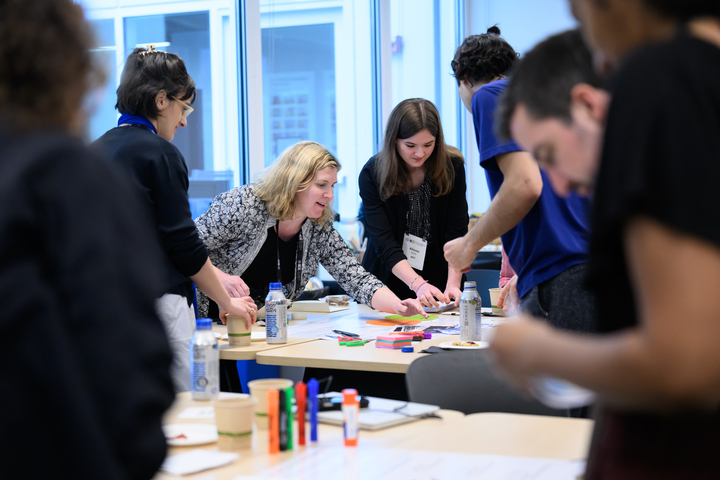
A workshop used to conduct research
Ecosystems are alive, dynamic, endlessly complex. In corporate sustainability, ecosystems are increasingly evaluated through data systems like dashboards, geospatial platforms, AI tools, reporting frameworks, and other digital products that promise to make living worlds more measurable and actionable.
Numerous new nature and biodiversity data tools are entering the market, so companies who are interested in evaluating the impacts of their operations on biodiversity have access to extensive data and standards. However, there is a design concern about whether these tools enable an understanding of ecological relations that would inform the development of mitigation solutions.
These concepts are explored in a new article published in the Design Research Society and presented at the Design Research Society Conference 2026, co-authored by Michelle Westerlaken, MCSC Impact Fellow; and Sonja Rattay, postdoctoral researcher at the Interdisciplinary Transformation University in Linz, Austria.
They used interviews, workshops, project meetings, and desk research with biodiversity and sustainability specialists across 13 large corporations to conduct their research. These stakeholders are trying to understand supply chain impacts, navigate emerging biodiversity reporting frameworks, compare possible interventions, and make a case for ecosystem action inside complex organizations.

“This paper connects environmental data tools to more-than-human design, an emerging field that asks how technologies might be designed not only for humans, but also according to the needs, agencies, and worlds of other living beings.”
“This paper connects environmental data tools to more-than-human design, an emerging field that asks how technologies might be designed not only for humans, but also according to the needs, agencies, and worlds of other living beings,” said Westerlaken. “We argue that this perspective can help reimagine biodiversity AI systems as tools for ecological care, interpretation, and response, not just measurement and management.”
What they found are a set of tensions between the ways corporate data systems tend to operate and the ways ecosystems live, change, and resist being captured as data.
“The tensions we identify in this paper, between living ecosystems and the AI systems we use to understand them, create an urgent and exciting space for innovation,” explained Westerlaken. “What if we design digital biodiversity tools around ideas of ecological adaptation and a search for symbiotic relations? And what if these tools did more than abstract data from ecosystems, helping people build closer and more meaningful relationships with the living systems they seek to protect?”
For design researchers, this is where the field of more-than-human design has a direct role to play in corporate sustainability. The paper suggests that ecosystem data platforms need more-than-human design precisely because the current tools are struggling with the aliveness of what they seek to understand.
For corporate sustainability teams, the implication is practical. Better ecosystem data will matter, but more data alone will not resolve the challenge.
Biodiversity tools need to support ecological forms of stability, internal sustainability advocacy, careful AI-assisted interpretation, and more relational attachments to nature. Ecosystem data systems should not only help them count living worlds. They should help them become more responsive to them.
At the MCSC, Westerlaken is currently prototyping design solutions with member companies to address these challenges. Her goal is to build a data platform that brings corporate stakeholders, ecosystem data, and local living communities into closer relationships. By making biodiversity data more situated, interpretable, and actionable, the platform aims to create new opportunities for data-driven environmental stewardship.