
Designing Data Technologies that Support Strategic Biodiversity Vision & Planning
May 13, 2026

A new white paper explores the complexities of biodiversity data systems and calls for innovation.
Healthy ecosystems are living, dynamic, and unpredictable – and there is a vast opportunity to design data systems that reflect this vitality and preserve the natural processes that are occurring. Doing so supports the type of long-term vision and planning that today’s pressing climate challenges demand. To embrace this opportunity, communities and companies worldwide are establishing how environmental data can best support diverse, resilient, and regenerative ecosystems – powerful assets in moving the needle on climate change. While many new technologies in this space have emerged, such as remote sensing, digital archives, and tools for corporate reporting, they tend to fragment living systems into static numbers, producing information, rather than strategic directions forward.
A new MCSC white paper, Vital Biodiversity Systems: A Companion Paper, explores the complexities of biodiversity data systems and calls for innovation in creating data tools and platforms that are aligned with ecological realities, inform biodiversity pathways, and integrate ecosystem sciences. The article’s co-authors – Michelle Westerlaken, MCSC Impact Fellow; Amanda Bischoff, MCSC Impact Fellow; Krishen Mertens, Impact Accelerator and Global Program Design Lead at IBM; and Alejandro Pertusa, Ecosystems & Biodiversity Lead at Inditex – combine their perspectives from both research and industry backgrounds. They address the limitations of current data systems and identify a clear objective to innovate a new platform.
“We aim to raise awareness about the challenges that exist with current biodiversity data systems,” said Westerlaken, whose research investigates how emerging biodiversity technologies can be brought into conversation with communities who are impacted by these innovations. “We hope to spark the development of platforms that better represent the vitality of the ecosystems they mediate, tailored to the needs of stakeholders, such as corporate sustainability teams, biodiversity specialists, and ecosystem entities themselves, who all require more effective and meaningful data practices.”

“We hope to spark the development of platforms that better represent the vitality of the ecosystems they mediate, tailored to the needs of stakeholders, such as corporate sustainability teams, biodiversity specialists, and ecosystem entities themselves, who all require more effective and meaningful data practices.”
“Communicating directly with stakeholders working in corporate sustainability provided important direction and insights for the white paper,” added Bischoff, whose work focuses on nature-based approaches to greenhouse gas measurement and sequestration and biodiversity preservation, especially in agricultural contexts. “There is a need for additional, accessible biodiversity tools that reflect the ever-evolving nature of ecosystems, in order to equip stakeholders with the actionable and relevant information that they need to effectively protect, restore, or adapt to ecosystems.”
Supporting Design Brief
This white paper works in tandem with a design brief, crafted by Westerlaken, that highlights recommendations on how to redirect tool development to be more innovative and future-oriented. The brief is aimed at designers, project managers, and funders and it addresses some of the core challenges with current data technologies and introduces the objective new platforms should center their design around. She shares more detail about this brief, including the creative process behind making it, in a recent video.
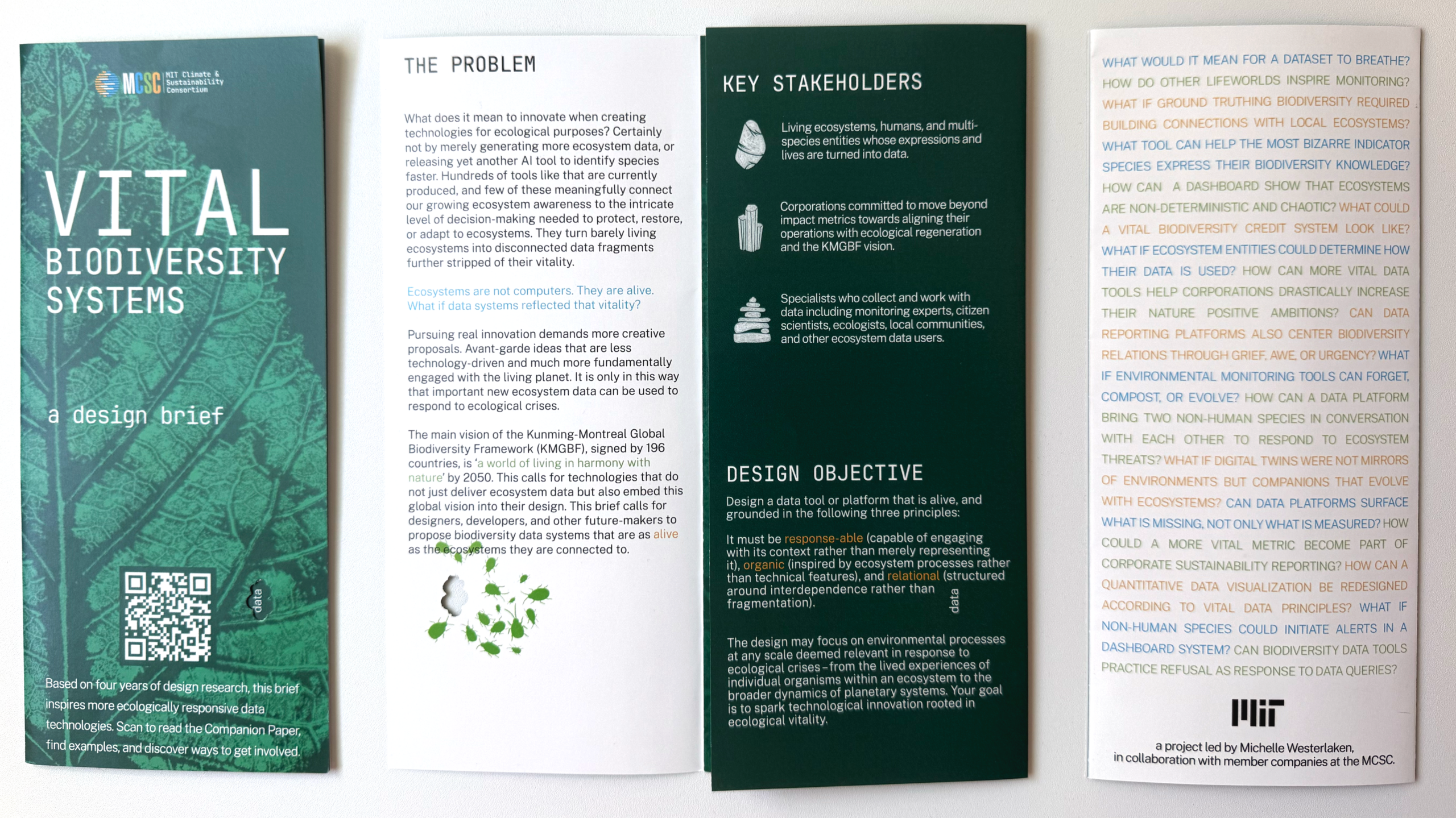
Snapshot of the design brief.
“This white paper serves as the backdrop for the design brief, drawing connections from its statements to more detailed research and providing the ecological, technological, and socio-political contexts from which its key ideas and proposed steps forward emerge,” Westerlaken explained.
The design brief calls for more vital biodiversity data systems, and it outlines the key stakeholders, design principles, and criteria that can make such innovation possible.
Industry-Informed Explorations
In order to innovate new biodiversity technologies, considering and prioritizing the needs of community stakeholders is crucial. This is a practice that IBM, MCSC member company, is prioritizing – through programs such as its IBM Impact Accelerator. This initiative supports the advancement of data platforms that will address issues within affected communities and develop feasible, implementable solutions with community feedback at the center.
“We are constantly looking for synergies between biodiversity and social impacts, and exploring measurable criteria to effectively identify and understand these relationships,” said Krishen Mertens of IBM.
Most recently, together with IBM’s Global Real Estate Office, the MCSC is carrying out a case study on open access biodiversity data at their Yorktown Heights research center to evaluate emerging biodiversity data platforms together with Westerlaken and undergraduate researcher Alison Rufo.
Read the full white paper here.
Please note that all author contributions to this white paper reflect individual expertise rather than company positions.