
Explorations of Biodiversity Technology, Co-led with Industry Feedback
March 23, 2026
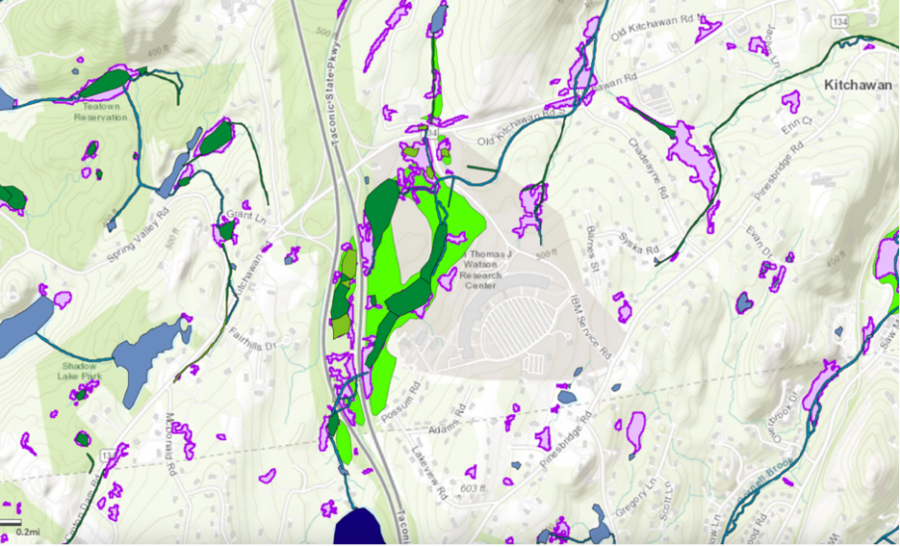
Through the MCSC, MIT undergraduate student Alison Rufo worked with IBM to explore biodiversity, using the wetlands at IBM’s global research headquarters in Yorktown Heights, New York as a backdrop. Wetland coverage map source: New York Department of Conservation, Freshwater Wetlands Program
As the harsh reality of a changing climate threatens our ecosystems, biodiversity loss has emerged as an urgent challenge. Companies across industries are seeking to understand and report how their operations affect ecosystems, species, and natural resources. New digital biodiversity tools – ranging from data visualizations to integrative reporting frameworks – are becoming essential for translating vast, fragmented environmental data into insights that corporations can use to make informed, responsible decisions. To better understand the implementation of these biodiversity tools, MIT student Alison Rufo has been working with MCSC Impact Fellow Michelle Westerlaken through MIT’s Undergraduate Research Opportunities Program (UROP). Together, they have been collaborating with MCSC member company IBM to identify existing open-access biodiversity data sources, assess technical and organizational challenges in working with those datasets, and outline opportunities for future research and innovation.
“I am inspired by a passion for biodiversity and an understanding of industry’s pivotal role in advancing climate action,” said Alison. “Understanding the difficulties and desires of member companies in assessing their environmental impacts is important so that we can effectively collaborate on data and technology solutions.”

“Understanding the difficulties and desires of member companies in assessing their environmental impacts is important so that we can effectively collaborate on data and technology solutions.”
The backdrop for Alison’s biodiversity explorations were IBM’s global research headquarters in Yorktown Heights, New York. By examining how ecological data is currently collected, accessed, and interpreted, the efforts led by Alison and Michelle laid the groundwork for understanding how corporate biodiversity reporting tools and new AI capabilities might evolve over time. Their work brought about the opportunity to collaborate directly with industry representatives – including Petrena Prince of the IBM Global Real Estate Office and Andrea Sarudi of the IBM Chief Sustainability Office – making their explorations more meaningful and grounded in a real-world setting. Feedback from IBM was essential during this project to ensure the data being collected was useful and relevant to company needs.
“Through this project, I learned about nature tech availability, and I am excited to see how these tools and data evolve, particularly as a response to corporate reporting needs,” said Alison. “My favorite part of this project was learning from IBM about their specific difficulties and gaining firsthand experience with remotely trying to understand an ecosystem and its vulnerabilities.”
This project is Alison’s third with the MCSC. She has previously worked with Michelle and MCSC Impact Fellow Amanda Bischoff to dive into the field of corporate biodiversity reporting. Through that work, Alison learned about the Taskforce on Nature-related Financial Disclosures (TNFD), an initiative that supports biodiversity decision-making by helping companies understand the impact they have on the living environment and how they can best set targets.
Alison plans to continue working with the MCSC and Michelle on a new UROP project in spring 2026 – advancing her understanding of biodiversity technologies but through a different lens. The next project will focus on developing data visualizations and other digital artefacts based on a design brief that Michelle created to highlight recommendations on how to redirect biodiversity tool development to be more innovative and future-oriented. Drawing on data from MCSC member companies as well as public databases, remote sensing technologies, and other platforms, Alison and Michelle will explore potential “data futures” for biodiversity reporting.